Card games are a fun and easy way for your child to practice their basic math facts. They don't cost a whole lot of money and can be used in an almost unlimited number of ways. Here is a video of two card games: Pyramid Solitaire and Hop, Skip, and Jump. Below the video are a few other playing card resources as well.
Place Value War
Target 24
Showing posts with label fourth grade. Show all posts
Showing posts with label fourth grade. Show all posts
Tuesday, June 19, 2012


Monday, June 18, 2012
Tons of Free Math Games to Play With Your Kids

Math Game Freebies
Monday, March 19, 2012
Two Minute Math Drills

Addition Facts | Subtraction Facts | |||
Mixed Addition Facts | Mixed Subtraction Facts | |||
Multiplication Facts | Division Facts | |||
Mixed Multiplication Facts |  | |||
Saturday, January 14, 2012
Math Libs
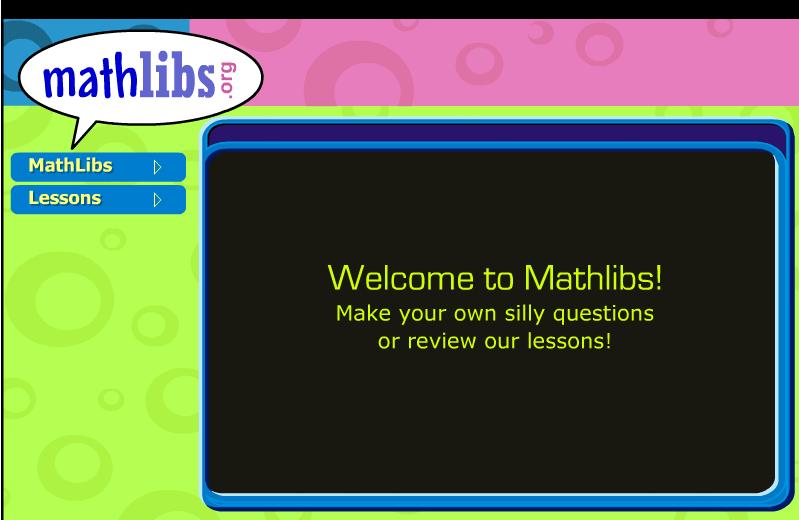
You type in the names of people, objects, and numbers which are used to generate math word problems that cover whole numbers, fractions, decimals, percentages, place value, expanded notation, multiplication, long division, algebraic thinking, geometry, probability and more.

When you get to the site you'll see a welcome message. Select either:
*MathLibs - This is the game generator. Choose grade 3 or 4 and then follow the prompts on the screen to choose a problem "Set." You'll be prompted to type in information to generate word problems.

If you answer incorrectly, you will see the correct answer together with a brief explanation and cartoon animation of how to do the problem.

Sunday, January 8, 2012
Paper Chains for Learning

My boys love making paper chains for counting down the days to special events (Christmas, birthdays, vacations, etc.), so I love this idea from the Mailbox for using paper chains for learning. Their suggestion was to use them to sequence events in a story, but my wheels started spinning with lots of other ideas as well:
Math Facts: Why not have your child write a series of math facts on the chains? For example write 9 X 1 = 9 on one, 9X2 =18 on another and so on for all the facts of 9s (or whatever fact they are working on).
Steps in a Math Problem: As your kiddos get older, math problems get more complex with more steps. Why not have them write each step on one of the chains. The steps of long division would be a great idea for this.
Life Cycles: Why not have your child write each of the stages of a life cycle on each of the chains? (Butterflies, frogs, etc.)
Parts of Speech: If you are learning parts of speech, have your child make noun chains, verb chains, adjective chains, or adverb chains. As they encounter these in their reading they can add to the chain.
Book Report: Turn a paper chain into a book report with one chain for the title, one chain for the author, one for the genre, several for main characters, and several for their thoughts on the book.
What other ideas can you think of?
Tuesday, January 3, 2012
Informational Text Resources


One area that my boys have had challenges in reading is with expository or informational texts. K12 reader has a myriad of resources in that area (as well as many others!). An example of the first grade and fourth grade level are pictured above. Here are the links:
1st grade
2nd grade
3rd grade
4th grade
5th grade

Penguin Chit Chat Template and Tons of Ideas!

Mailbox has this adorable free penguin chit chat template that you can use with your kiddos for reviewing all types of skills.
Practice Dialogue
They suggest folding a sheet of paper into four sections and having your child glue a penguin in each one along with dialogue. This is a great language arts/creative writing activity for your child!
Math Review
You can also use the penguins to help the child remember the steps to a math problem such as long division. You could have the child write each step in a speech bubble for the various penguins. For example, one penguin could say "Divide" the next could say "Multiply" the third, "Subtract" the fourth, "Bring down".
Fun Review Game
Print out the penguins for fun game pieces. Write the questions on the back of each penguin and see who can "win" the most penguins by answering the most questions correctly!
What other ideas can you think of?

Sunday, December 4, 2011
Grinch Math Game

I have absolutely fallen in love with this Grinch Math Game from Finally in First! As is, this set is perfect for Luke who is working on his addition facts, but my brain is spinning with ideas for adapting the game with multiplication facts and positive and negative integers for my older boys. Can't wait to get started! And.... I love her idea for making the case with a recycled soup container (you could also use a Pringles can, yougurt container, sour cream container, etc.) - or just use one of those cheap dollar store plastic containers.

Saturday, December 3, 2011
My Book About Winter Holidays

Scholastic is offering a great holiday freebie for your older kiddos (third -fifth grade)! You can print out this Winter Holiday Booklet for your child to read and complete as they learn about the various winter holidays. Great for both reading and social studies!
Sunday, November 27, 2011
Paper Plates Make Great Venn Diagrams!

If your child is working on comparing and contrasting two of anything (books, math concepts, habitats, etc.) you may want to try using two paper plates for a fun way to present a venn diagram.
Saturday, November 19, 2011
What's The Scoop Graphic Organizer

I love this What's The Scoop? Graphic Organizer from Laura Candler! You can have your child use it as they read a newspaper or magazine article, when they find an article on the web, or while reading a book.

Sunday, October 30, 2011
Making Words File Folder

I can't wait to make this making words file folder that I found over at Teacher Bits and Bobs for Tyler, Cody, and Luke to practice their spelling. Simply print out the forms here, and glue to a file folder. The moveable letters are made using those super small post-its. My boys will love the hands on aspect!
Make Your Own Math Flash Cards

Addition Labels
Plus One Facts
Facts of 5
Doubles to 9+9
Facts of 10
Near Doubles
2 Digit Doubles
Plus 10 Set 1
Plus 10 Set 2
Plus 9 Set 1
Plus 9 Set 2
Multiplication Labels
x2 Facts
x5 Facts
x2 and x5 Facts (mixed)
x10 Facts
x3 Facts
x4 Facts
x6 Facts
x7 Facts
x8 Facts
x9 Facts

Saturday, October 29, 2011
Mini- Water Cycle

I love this idea for a Mini-Water Cycle from Laura Candler. I am going to try it with the boys the next time we have Rotisserie Chicken from the grocery store (meal plan idea!). All that you need to do is fill an empty and cleaned container with a rock to represent a mountain, grass for the vegetation, and a small pond made from aluminum foil and filled with water. To power up the water cycle, you close the container and put it in the sun. If you have bad weather or just want to keep it an indoor project you can use a lamp as well.

To learn more about the water cycle, try these worksheets:
Water Cycle Worksheet
Water Cycle Comic Strip

Lots of resources for learning about fractions!

If you are working on teaching your child about fractions, here are several great resources:
Fraction Circles
Equal Parts Fraction Worksheet
Cookie Recipe Math
Fraction Word Problems
Fruit Loop Fractions Activity
Pizza Fractions Math Journal
Comparing Fractions Quiz
Friday, October 28, 2011
The Turkey and The Pumpkin Reading Comprehension

If you are looking for a little extra reading for the fall holidays for your kiddos, you may want to have them read (or read to them) The Turkey and the Pumpkin which you can find here. The short story is about a turkey who runs away because he doesn't want to be carved for Thanksgiving dinner only to meet a little pumpkin who really wants to be carved for Halloween.
The Turkey and the Pumpkin.pdf
Here are a few comprehension questions to ask your child after reading:
1. Why do you think Oscar wanted to go to the petting zoo?
2. Why was the little pumpkin originally happy to see Oscar?
3. How did the zoo keeper change in the story?

Sunday, October 23, 2011
Scary Story Map

If your kiddos are fans of scary stories like Goosebumps like my boys are, you may want to try giving them this Scary Story Map to help them write their own scary story. The graphic organizer is a great way to get them brainstorming their way to a fun and spooky story!
Halloween Coordinate Graphing Activities


Jack O' Lantern Graph
Frankenstein Graph
Sunday, October 2, 2011
Alexander Who Used To Be Rich Last Sunday Lesson Plan

Alexander feels very rich after receiving a dollar from his grandmother, but after a series of spending choices, he learns about the value of saving rather than spending money. This is a great story for teaching your child about economics, spending choices, choices in general, and counting coins. Here are some ideas to get you started!
Before Reading
ASK: How much money would you need to feel rich? Do you like to feel rich? If so, why?
Look through the book at the pictures of Alexander. Pay attention to his face and the range of feelings he goes through. Look at the cover and talk about what kind of face he is making and what words might go along with that face.
During Reading
Look carefully at the details in the pictures as you read. Talk about what is happening in the background.
Look at the pictures of Alexander after he spends money. Is he pleased with the ways he spends his money?
After Reading
ASK: For what toy does Alexander really want to save his money (a walkie-talkie)? Why can’t he save it if it is important to him?
Journal: Name some purchases you have made that seem kind of silly now. Tell about things you have bought in the past that you wish you hadn’t and why you think you made a bad choice.
Reading
Learn about statements and questions with this Alexander Who Used to Be Rich worksheet.
Alexander Who Used to Be Rich Scavenger Hunt
Alexander Who Used To Be Rich Sequencing
Alexander Who Used To Be Rich Reading Response Summary
Alexander Who Used to Be Rich Locate A Sentence
Alexander Who Used to Be Rich Reading Response - Humor
Alexander Who Used to Be Rich Reading Response
Cause and Effect Activity
Fact and Opinion
Main Idea Activity
Check your child's understanding of the book with this Alexander Who Used to Be Rich Last Sunday Reading Assessment.
Spelling:
Alexander Who Used to Be Rich Spelling Words
Language Arts:
Practice editing with this Alexander Who Used to Be Rich Daily Fix-it.
Math:
Keep track of the money Alexander spent with this math activity.

Thursday, July 28, 2011
Animal Cracker Learning Fun
You can come up with learning ideas all around you! I was in the grocery store the other day when I spotted these:

Instantly the wheels in my brain started spinning with all sorts of ideas to use them for. I knew the boys would enjoy the animal theme since we had just visited an animal safari.
The first thing we used them for was graphing. Luke used the following supplies:

He then made his own graph and graphed the animal crackers in his snack. I asked him questions such as: what animal do you have the most of? the least of? How many more giraffes do you have than elephants.

Tyler and Cody had learned about ecosystems and habitats, so they sorted their snacks by their habitats using this worksheet.

They also learned about animal probability using this worksheet.

Here are a few other animal cracker related activities you could try with your homeschoolers:

Animal Cracker Coloring Page

Zoo animals emergent reader
And your more advanced readers might want to learn about Dian Fossey.


Instantly the wheels in my brain started spinning with all sorts of ideas to use them for. I knew the boys would enjoy the animal theme since we had just visited an animal safari.
The first thing we used them for was graphing. Luke used the following supplies:

He then made his own graph and graphed the animal crackers in his snack. I asked him questions such as: what animal do you have the most of? the least of? How many more giraffes do you have than elephants.

Tyler and Cody had learned about ecosystems and habitats, so they sorted their snacks by their habitats using this worksheet.
They also learned about animal probability using this worksheet.
Here are a few other animal cracker related activities you could try with your homeschoolers:
Animal Cracker Coloring Page
Zoo animals emergent reader
And your more advanced readers might want to learn about Dian Fossey.
Subscribe to:
Posts (Atom)


 Posts
Posts


